
ClearAir® Air-to-Water Heat Pump
Heat Pumps
CB-ClearAir
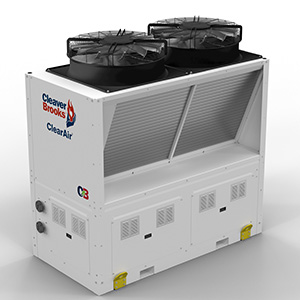
- Compressor: Reciprocating (single)
- Electrical: 480 V/ 3-phase / 60-Hz
- Emissions (ppm NOx): Zero Emissions
- Nominal COP: 2.7
- Outlet Water Temperature Range: 86°F (30°C) to 176°F (80°C)
- Refrigerant: R-513A
- Nominal Capacity: 350 MBH (102.6 kW)
- Zero emission, highly efficient hydronic heating solution
- Maximum outlet water temperature: 176°F (80°C)
- Nominal Capacity: 350 MBH (102.6 kW)
- Multiple units can be connected together for added system capacity
 The ClearAir heat pump uses electricity to deliver heating with zero site emissions, helping you meet decarbonization goals. With a Coefficient of Performance (COP) greater than 1.0, it supplies more heat energy than the electricity it consumes.
- Product Overview
- Related Resources
- Applications
- Integrated monobloc design simplifies installation, maintenance, and service.
- Outdoor rated and supports mounting on roof or on grade.
- Reciprocating compressor for high pressure, high temperature applications.
- Uses R-513A refrigerant, with 573 GWP and classified A1, complying with strict environmental and safety policies.
The ClearAir® heat pump can deliver outlet water temperatures up to 176°F (80°C), making it well-suited for high temperature-rated coils, radiators, and terminal units found in many existing buildings, enabling efficient system upgrades without costly equipment replacements.
The ClearAir® AW0350 heat pump is a key component of a scalable system design.
- A single unit is ideal for smaller loads or dedicated applications
- Multiple units can be connected together for added system capacity
- Hybrid systems combining ClearAir® heat pumps with boilers ensure backup at peak demand, reducing carbon footprint with no risk to heating reliability